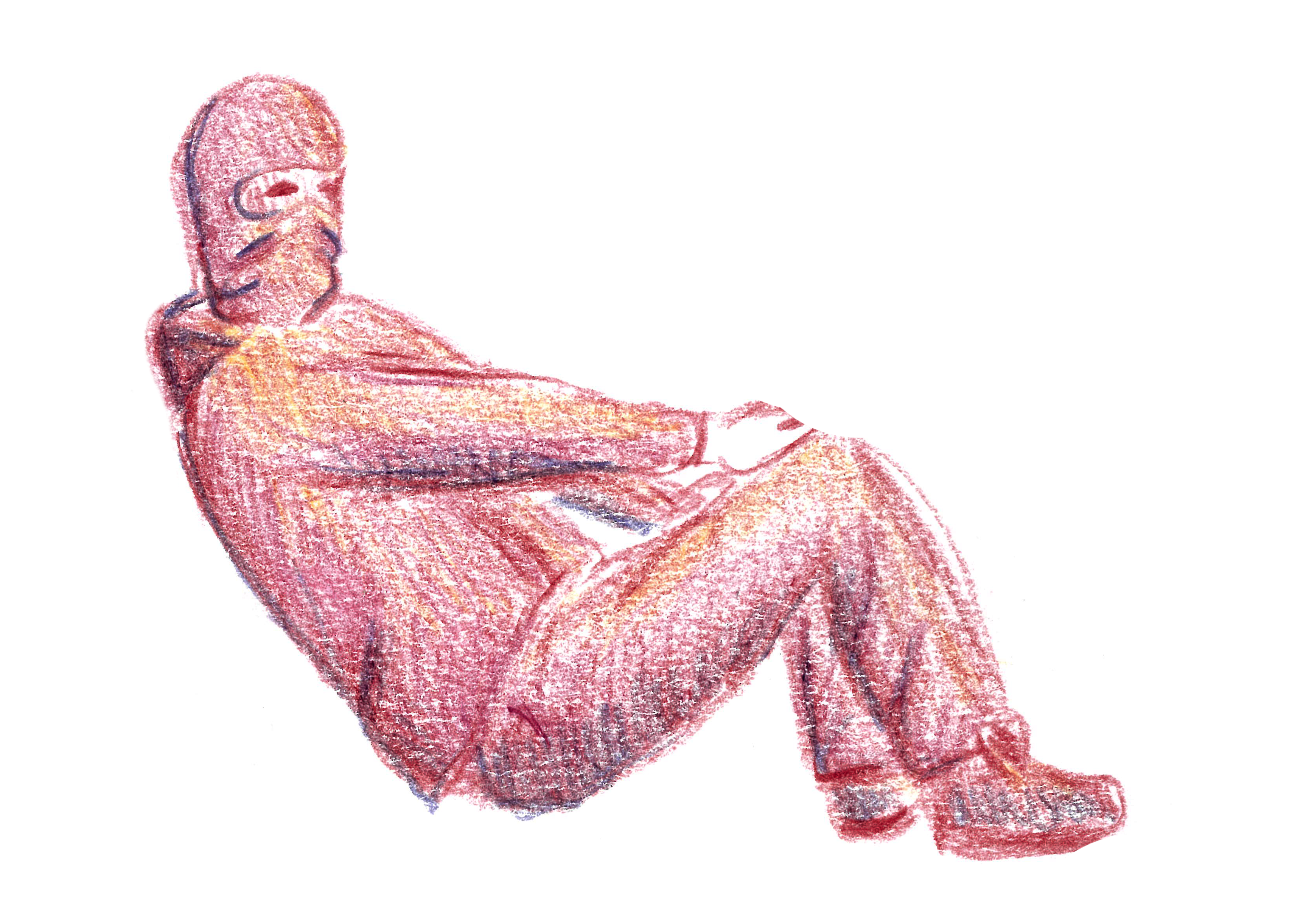
This project was born out of experiences (allegedly) participating in direct actions. Moments filled with awe, fear, anger, and hope left a strong emotional imprint, compelling me to process them through art. Witnessing intricate tree-house villages, facing police violence in green fields, being blinded by tear gas, or standing at the edge of a massive coal mine etched vivid scenes in my mind. I began sketching comics in small notebooks—not as full stories but as a way to capture the essence of those experiences. Some of these raw frames found their way into the final comic.
These actions also exposed me to state violence for the first time, sparking both personal trauma and a desire to explore the subject academically. Discussions with peers in anarchist and degrowth spaces questioned the state’s role in an eco-social transition: Can it be reformed, or should we let it crumble? Inspired by these debates and the paper Degrowth and the State (D’Alisa & Kallis, 2020), I chose to combine artistic expression with research to explore these ideas further.
Academic Research
The first point of the agenda was to develop a strong literature backbone for the project. Using Degrowth and the State as a starting point, I have explored authors that have referenced this text and degrowth scholars that have touched on this subject since its publication. I have also further explored general theories of the states and academic papers that were of interest to sharpen the theoretical base of this project. Alongside this process, I brainstormed while reading each paper to figure out how to convert the diverse theoretical concepts presented into a visually engaging format. I collected these ideas on a paper listing all the crazy ideas that could later be used for the comic.

Mapping the Project
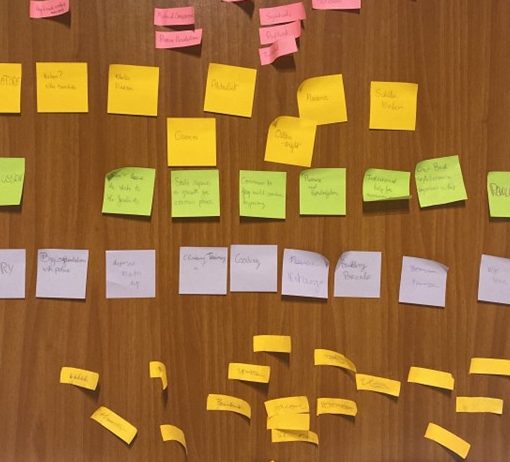
Once the theoretical research was done and I had collected a satisfying number of ideas for scenes and visual content, I mapped out the project to give it a shape. The mapping was following four categories put in parallel; the storyline, the scholars, the theoretical concepts they developed, and the visual ideas that had emerged. This post-it madness allowed me to have a clearer picture of where I was going and to be able to present the project.
Storyboard
This part was probably the most creatively interesting phase of the project. It constituted designing the content of each page, the frames, the dialogues, choosing the images, the order, think of the colors. This phase of the project is the planning out of the blueprint of the comic, the backbone that can then be transcribed into the actual final project. Making a storyboard is particularly useful for testing different ideas and observing how they fit together. The challenge was to find the right words and the right images for this discussion to come alive. Even more challenging was to conclude the comic because this subject could go on forever, it then became a choice to not give full closure for the discussion to go on among readers.

Comic Creation
The final and most dreaded part of the project; drawing the actual pages of the comic. This part was greatly challenging due to the fear of messing up, especially since it was a medium I had very little experience with. I first tested some different techniques, and different styles of drawing and writing and I then landed on color pencils. This choice allowed me to convey some of the visual effects I intended to create and was a comfortable medium for me to express the ideas developed previously. One of the biggest challenges was the time necessary to produce a work of quality. Some frames were quite detailed so it took much longer than expected to produce them. However this phase was really pleasant to realize, this work is tedious but can be relaxing and greatly rewarding. Having a page come out in the way I intended when I had no hope in my artistic skills was quite satisfactory. Furthermore, it was quite a relief to see that all of these hours of preparation work came into fruition.

 Oski
Oski 